
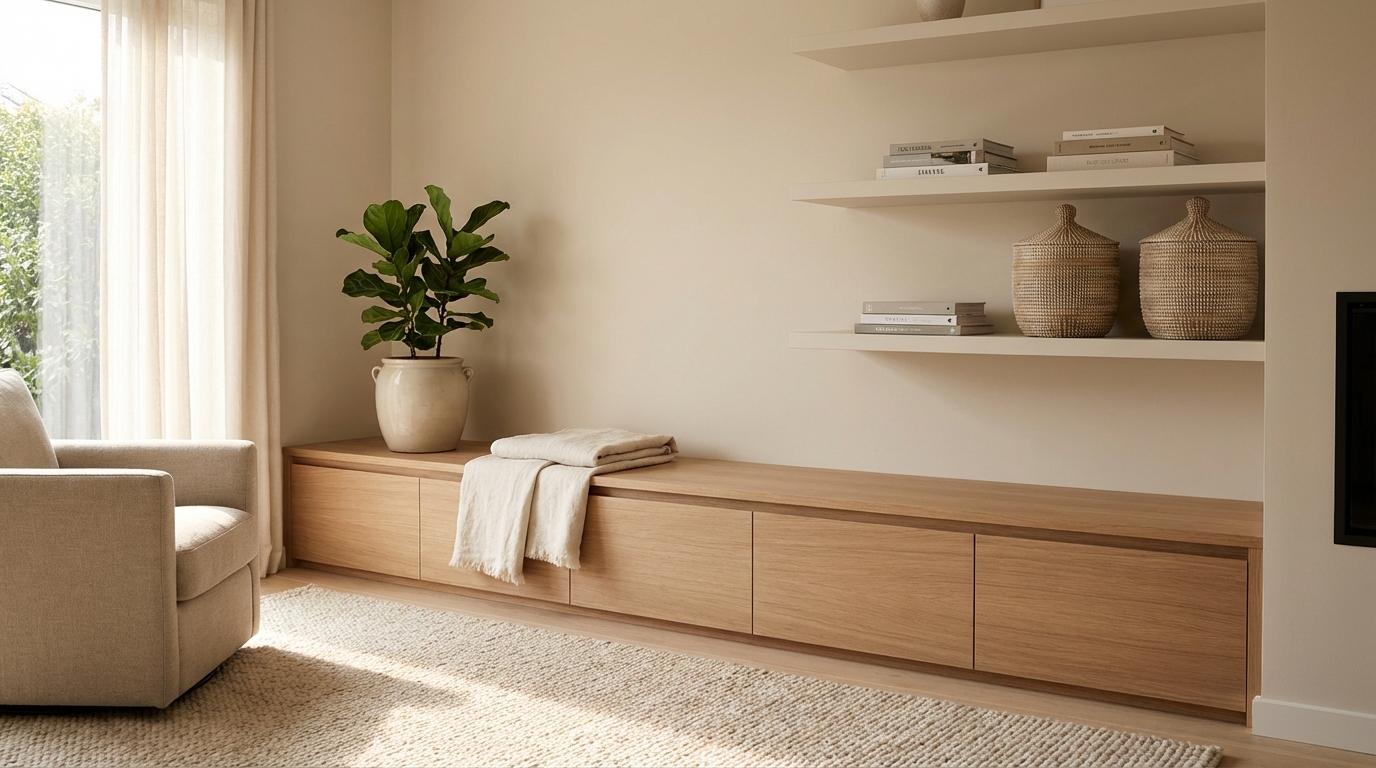
Creating storage without visual noise is about finding calm in your living space while still keeping everyday items close at hand. Visual noise happens when too many things compete for attention at once. It can come from cluttered shelves, mismatched containers, or storage that spills into open view. A home can be full of useful items and still feel peaceful when storage is planned with intention. This approach focuses on hiding what you do not need to see, softening what must remain visible, and choosing storage solutions that blend into the room instead of shouting for attention.
Understanding Visual Noise in the Home
Visual noise is not the same as clutter, though the two often overlap. Clutter is about having too many items or not enough organization. Visual noise is about how the eye moves through a space. Even a tidy room can feel loud if storage elements are busy, bold, or inconsistent. Bright labels, open bins full of mixed items, and shelves packed from edge to edge all add to visual noise.
Our brains like patterns and rest. When everything is visible, the brain keeps processing, even when we want to relax. Storage that reduces visual noise helps the eye settle. It allows important features like natural light, furniture lines, and textures to stand out instead of being buried under layers of stuff.
Balancing Access and Discretion
One of the biggest challenges in home storage is balancing easy access with a clean look. If storage is too hidden, items become hard to reach and daily routines feel frustrating. If everything is open and visible, the room can feel chaotic. The goal is a middle ground where items are easy to grab but not constantly on display.
Think about how often you use an item. Daily items deserve the easiest access, while seasonal or occasional items can be stored deeper or higher. By matching access level with frequency of use, you can keep prime visual real estate clear while still supporting real life.
Closed Storage as a Foundation
Closed storage is one of the most effective tools for reducing visual noise. Cabinets, drawers, and storage furniture with doors hide the details and create smooth surfaces. These surfaces give the eye a place to rest. Even when the inside is full, the outside remains calm.
In kitchens, using cabinets instead of open shelving can instantly reduce visual clutter. Small appliances, food packaging, and mismatched dishes disappear behind doors. In living rooms, sideboards and media consoles with closed compartments hide cords, remotes, and games that often create messy visuals.
Choosing the Right Door Style
Flat-panel doors create the least visual interruption. Shaker-style doors add gentle detail without being busy. Glass-front doors can work when the contents are simple and coordinated, but they still require visual discipline. Solid doors are more forgiving and easier to maintain over time.
Handle choice also matters. Integrated pulls or low-profile handles keep lines clean. Oversized or ornate hardware can add unnecessary attention and break the visual flow.
Using Drawers to Hide Complexity
Drawers are powerful because they hide many small items behind one simple face. A drawer can hold a mix of tools, supplies, or accessories without adding visual noise to the room. Inside, organizers keep items from turning into hidden clutter.
Deep drawers in kitchens can replace lower cabinets and reduce the need to stack items. In bedrooms, drawer systems inside closets allow clothing and accessories to be stored out of sight while staying easy to reach.
Interior Organization for Calm Storage
While interior organization is not visible, it affects how storage functions. When drawers are organized, items are easier to find, which reduces the urge to leave things out. Simple dividers, trays, and boxes work better than complex systems. The goal is clarity, not perfection.
Built-In Storage That Blends In
Built-in storage has a unique advantage because it can be designed to look like part of the architecture. When storage matches wall color, trim style, and proportions, it visually recedes. This creates storage without adding visual weight.
Floor-to-ceiling cabinets make use of vertical space and reduce broken lines. Instead of several separate pieces of furniture, one continuous unit creates a calm backdrop. This is especially helpful in small homes where every visual break feels larger.
Matching Color and Finish
Painting built-in storage the same color as the walls helps it blend in. Light colors make a room feel open, while darker colors can add depth without noise when used consistently. The key is avoiding contrast that draws the eye to the storage itself.
Wood finishes should be used with care. Natural wood adds warmth, but mixing too many tones can create visual confusion. Repeating the same finish throughout the space keeps the look unified.
Furniture That Does Double Duty
Storage furniture that serves more than one purpose reduces the number of items in a room. Fewer pieces mean fewer visual elements to process. Benches with hidden compartments, beds with built-in drawers, and coffee tables with storage all help keep items accessible but out of sight.
When choosing multifunctional furniture, simple shapes work best. Clean lines and neutral colors allow the piece to fade into the background while still doing important work.
Hidden Storage in Seating
Ottomans and benches with lift-up tops are useful in living rooms, bedrooms, and entryways. They can store blankets, shoes, or bags while providing seating. Upholstered pieces in solid fabrics create less visual noise than patterned or highly textured options.
Entryway Storage Without the Messy Look
Entryways are often the hardest areas to keep calm. Shoes, coats, keys, and bags pile up quickly. Creating storage without visual noise here sets the tone for the rest of the home.
Closed cabinets for shoes keep floors clear. Wall-mounted cabinets or slim consoles with drawers hide small items. Hooks can be placed inside closets or behind doors instead of out in the open.
Drop Zones That Disappear
A small drawer or cabinet near the entry can act as a drop zone for keys and mail. When these items have a hidden home, they are less likely to spread across surfaces. Choosing storage that matches the wall color helps it visually disappear.
Kitchen Storage That Feels Calm
Kitchens are full of items with bold packaging and varied shapes. Reducing visual noise here can make the space feel cleaner and more welcoming, even when it is in use.
Keeping countertops as clear as possible is a major step. Storing appliances inside cabinets or appliance garages hides bulky shapes. Using drawer inserts for utensils and tools keeps them off the counter.
Pantry Organization for Visual Quiet
Inside pantries, uniform containers reduce visual chaos. While the pantry door may be closed most of the time, an organized interior makes it easier to keep the rest of the kitchen tidy. Clear or simple containers help you see what you have without adding bright labels or busy patterns.
Bathroom Storage That Feels Spa-Like
Bathrooms benefit greatly from reduced visual noise. A calm bathroom feels cleaner and more relaxing. Closed storage under sinks and behind mirrors hides personal items and cleaning supplies.
Wall niches in showers keep products accessible without adding shelves that stick out visually. Choosing bottles in similar colors or transferring products to simple containers can also help, but the main focus is hiding what does not need to be seen.
Vanity Design for Less Visual Clutter
Vanities with drawers instead of open shelves keep items out of sight. Integrated handles and smooth finishes maintain a clean look. Even small bathrooms feel larger when storage does not interrupt the visual flow.
Bedroom Storage That Supports Rest
The bedroom should be one of the calmest rooms in the house. Visual noise here can interfere with rest and relaxation. Storage that blends in helps maintain a peaceful atmosphere.
Closets with solid doors hide clothing and accessories. Inside, organizing by category makes it easier to keep doors closed instead of leaving items out. Bedside tables with drawers keep personal items tucked away.
Under-Bed Storage Without the Messy Look
Under-bed storage is useful but can add visual noise if not handled well. Built-in drawers or storage beds keep everything contained. If using bins, choose ones that fully slide under the bed and are not visible from standing height.
Living Room Storage That Supports Relaxation
Living rooms often serve many functions, from entertainment to socializing to quiet time. Storage that hides everyday items helps the room adapt without feeling cluttered.
Media storage with closed doors hides electronics and cables. Bookshelves can include lower cabinets to conceal less attractive items while keeping favorite books on display in a controlled way.
Curated Open Storage
Some open storage can work when it is curated. Leaving empty space on shelves is just as important as what you put on them. Grouping similar items and limiting color variety reduces visual noise. Open storage should feel intentional, not crowded.
Using Walls Without Overloading Them
Wall storage can free up floor space, but it can also add visual noise if overused. The key is restraint. A few well-placed cabinets or shelves are better than covering every wall.
Wall-mounted cabinets that align with door frames or furniture edges feel more integrated. Floating cabinets with hidden mounting hardware keep the look clean.
Vertical Storage That Feels Light
Tall storage can feel heavy if it is bulky or dark. Using lighter colors, slimmer profiles, and consistent spacing helps vertical storage feel balanced. When storage reaches the ceiling, it eliminates awkward gaps that collect dust and draw the eye.
Color and Material Choices That Reduce Noise
Color plays a major role in visual noise. High-contrast storage stands out, while low-contrast storage blends in. Neutral colors, soft tones, and finishes with low shine create a calmer look.
Materials with subtle texture, like matte wood or painted surfaces, are easier on the eyes than glossy or heavily patterned materials. Repeating the same materials throughout a space strengthens visual cohesion.
Consistency Over Variety
Using too many different storage styles creates visual fragmentation. Choosing a small number of styles and repeating them makes the space feel organized. This does not mean everything must match perfectly, but there should be a clear relationship between pieces.
Hiding Storage in Plain Sight
Some of the best storage solutions are the ones you do not notice at first. Toe-kick drawers in kitchens, storage behind wall panels, and hidden compartments in furniture all add function without adding visual elements.
Mirrored cabinets can double as wall decor while hiding storage. Panels that look like part of the wall can conceal closets or storage rooms.
Custom Solutions for Unique Spaces
Every home has awkward spaces that can become sources of visual noise if left unused. Custom storage under stairs, in alcoves, or around windows turns these areas into functional features that feel intentional.
Maintaining Storage Without Visual Noise Over Time
Even the best storage systems need maintenance. As items change and life evolves, storage should be adjusted. Regularly editing what you keep helps prevent overflow that leads to visible clutter.
When storage areas become too full, items start to spill out. Leaving some empty space inside cabinets and drawers allows for growth and makes it easier to put things away.
Daily Habits That Support Calm Spaces
Simple habits, like returning items to their hidden homes and clearing surfaces at the end of the day, protect the visual calm of a space. Storage without visual noise works best when it is supported by routines that keep items from lingering in sight.
Adapting Storage for Different Lifestyles
Storage needs vary by household. Families with children, people who work from home, and those with hobbies all require different solutions. The principles of reducing visual noise remain the same, even as the details change.
For families, closed toy storage in common areas keeps playtime flexible without dominating the room. For home offices, cabinets that hide work supplies allow the space to shift back to a living area after hours.
Flexible Storage Systems
Modular storage that can be reconfigured supports changing needs. Systems with interchangeable drawers, shelves, and doors allow you to adjust without introducing new visual styles. Keeping the outer look consistent maintains visual calm even as the inside changes.
Small Space Strategies for Visual Quiet
In small spaces, visual noise feels amplified. Storage must work harder while taking up less visual space. Built-ins, wall-mounted units, and furniture with hidden storage are especially useful.
Limiting the number of materials and colors is critical in small homes. When storage blends with the walls and furniture, the space feels larger and more open.
Making the Most of Every Inch
Using corners, vertical space, and multi-use furniture reduces the need for extra storage pieces. When each item has a clear purpose and place, the room stays functional without becoming visually crowded.
Psychological Benefits of Reduced Visual Noise
Homes with less visual noise often feel more restful and easier to maintain. When storage hides complexity, daily life feels simpler. Decision fatigue is reduced because there are fewer visible choices competing for attention.
This calm environment can support focus, relaxation, and a sense of control. Storage without visual noise is not about minimalism for its own sake, but about creating a space that supports well-being.
Storage as a Background Element
The most successful storage fades into the background. It supports life without becoming the focus. When storage works quietly, the people and activities in the home take center stage.