
Homes can make life feel lighter or heavier. Many people think a good home must look perfect, match trends, or impress guests. But daily life is shaped by small actions done again and again. Opening doors, cooking meals, doing laundry, cleaning, resting, and finding things all take energy. Designing for ease means choosing options that reduce effort instead of chasing perfection. This approach focuses on how a home works for the people living in it, not how it looks in photos. Small design choices can save time, protect energy, and lower stress every single day.
Designing for Ease Instead of Perfection
Designing for ease means asking simple questions. Is this easy to use? Is it easy to clean? Does it reduce steps, bending, lifting, or searching? Perfection often leads to delicate items, complicated layouts, and strict rules about how things should look. Ease allows flexibility, comfort, and forgiveness.
A home built for ease accepts real life. Shoes land near the door. Dishes stack in the sink. Laundry waits its turn. When the home supports these realities, people feel less pressure to constantly fix or hide signs of living.
Ease-based design also supports different energy levels. On busy days or during illness, the home still works. Tasks take less effort, and the space feels supportive rather than demanding.
Entryway Choices That Save Time and Energy
The entryway is where daily movement begins and ends. A well-designed entryway reduces mess and decision fatigue.
Simple Storage at the Door
Hooks are often easier than hangers. Open shelves are easier than cabinets. A small bench makes it easier to sit while putting on shoes. When storage is visible and reachable, items return to their place more often.
- Wall hooks for coats, bags, and hats
- A tray or bowl for keys and wallets
- Shoe racks that allow shoes to slide in without stacking
- A bench or sturdy chair for sitting
Flooring That Handles Real Life
Entryways face dirt, water, and wear. Choosing flooring that hides marks and cleans easily reduces daily stress. Textured tile, vinyl plank, or sealed concrete are easier to maintain than delicate surfaces.
Washable rugs or mats near the door catch dirt and moisture. Darker colors or patterns show less mess between cleanings.
Kitchen Layouts That Reduce Steps
The kitchen is one of the most used spaces in a home. Small layout choices can save thousands of steps over time.
Keeping Tools Near Tasks
Storing items close to where they are used reduces movement and searching.
- Knives and cutting boards near food prep areas
- Pots and pans near the stove
- Plates and glasses near the dishwasher
- Trash and compost near prep spaces
This setup allows cooking and cleanup to flow smoothly without constant crossing of the room.
Choosing Easy-to-Clean Surfaces
Perfection often favors materials that look beautiful but stain or scratch easily. Ease favors surfaces that wipe clean without special care.
- Countertops that do not require sealing
- Backsplashes with minimal grout lines
- Cabinet finishes that hide fingerprints
These choices reduce the time spent cleaning and worrying about damage.
Open Storage Where It Helps
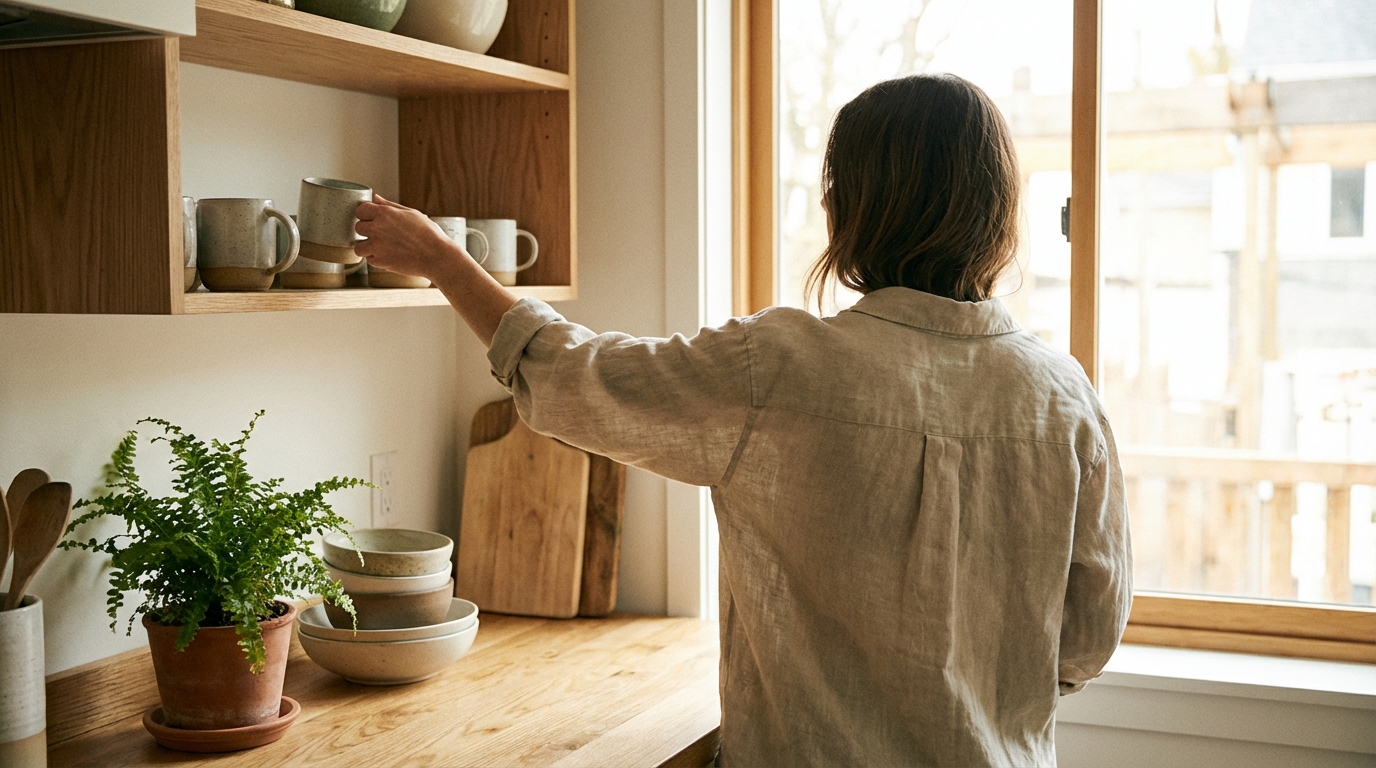
Open shelves can be easier than cabinets for everyday items. They reduce bending, opening, and closing. They also remind people what they own, which reduces duplicate purchases.
Open storage works best when used for items that are already used often and washed frequently.
Laundry Spaces That Fit Real Routines
Laundry is a repeating task that can drain energy when poorly designed.
Location Matters
When possible, laundry machines closer to bedrooms reduce carrying heavy loads up and down stairs. Even small reductions in distance can make a big difference over time.
Sorting Made Simple
Multiple baskets or divided hampers make sorting easier from the start.
- Separate bins for lights and darks
- A basket for towels
- A container for items needing special care
This system saves time and mental effort on laundry day.
Folding and Hanging Support
A counter or table near the machines allows folding right away. Wall-mounted drying racks or rods make air-drying easier without cluttering other rooms.
Bathrooms Designed for Comfort and Speed
Bathrooms are used daily, often when people are tired or rushed. Ease-focused design helps these moments feel smoother.
Storage at Arm’s Reach
Items used every day should be easy to reach without bending or stretching.
- Drawer organizers for toiletries
- Open shelves for towels
- Hooks instead of towel bars
Hooks allow towels to dry without careful folding.
Materials That Reduce Cleaning Time
Bathrooms benefit from surfaces that resist water spots and soap buildup.
- Matte finishes that hide water marks
- Large tiles with fewer grout lines
- Shower curtains that can be machine washed
These choices lower the effort needed to keep the space fresh.
Cleaning-Friendly Design Throughout the Home
Cleaning becomes easier when the home is designed to support it.
Clear Floors
Furniture with legs allows vacuums and mops to pass underneath. Wall-mounted shelves and cabinets free up floor space and reduce dust collection.
Fewer Hard-to-Reach Spots
Decorative ledges, deep grooves, and high shelves collect dust and require extra tools. Simpler lines reduce cleaning effort.
Easy Storage for Cleaning Supplies
Keeping cleaning tools where they are used encourages quick cleanups.
- Bathroom spray stored in the bathroom
- Handheld vacuum in a central closet
- Microfiber cloths in multiple rooms
Storage That Supports Daily Habits
Storage works best when it matches real behavior, not ideal behavior.
Open and Visible Storage
Clear bins, open baskets, and labeled containers reduce searching and decision-making. When items are visible, they are easier to put away.
Right-Sized Storage
Overfilled storage creates mess. Storage that fits the amount owned supports ease.
- Enough space for items without stacking
- Drawers that open fully
- Shelves adjusted to item height
Lighting Choices That Reduce Strain
Good lighting reduces eye strain and helps tasks move faster.
Layered Lighting
Using more than one type of light supports different activities.
- Overhead lighting for general use
- Task lighting for reading and cooking
- Soft lamps for relaxation
Easy Controls
Lights that turn on easily reduce friction.
- Switches near room entrances
- Motion-sensor lights in closets and hallways
- Dimmers to adjust brightness without changing fixtures
Furniture That Supports the Body
Furniture choices affect comfort and energy.
Comfort Over Trends
Chairs and sofas should support the body without extra pillows or adjustments. Comfort reduces the effort needed to relax.
Easy Movement
Furniture that is easy to move allows quick rearranging for cleaning or gatherings. Lightweight pieces or furniture sliders reduce strain.
Multi-Use Pieces
Furniture that serves more than one purpose reduces clutter.
- Ottomans with storage
- Benches with baskets underneath
- Tables with shelves
Technology That Gently Helps
Technology can reduce effort when it is simple and reliable.
Automation for Repeating Tasks
Small automations save time and energy.
- Robot vacuums for daily dust
- Programmable thermostats
- Timers for lights
Simple Controls
Technology should be easy to use. Complicated systems create frustration. Clear buttons, simple apps, and manual overrides support ease.
Maintenance-Friendly Materials
Homes require upkeep. Choosing low-maintenance materials reduces long-term effort.
Durable Finishes
Durable finishes age better and need less attention.
- Washable paint
- Scratch-resistant flooring
- Outdoor materials rated for weather
Standard Sizes and Parts
Standard fixtures and appliances are easier to repair or replace. Custom parts may look special but often increase effort later.
Outdoor Spaces That Are Easy to Care For
Outdoor areas can bring joy or stress depending on design.
Low-Effort Landscaping
Plants suited to the local climate need less watering and care.
- Native plants
- Mulch to reduce weeds
- Ground covers instead of large lawns
Simple Outdoor Storage
Storage near where tools are used reduces setup time.
- Sheds near gardens
- Hooks for hoses
- Benches with storage for cushions
Routines Supported by Space
Homes work best when spaces support daily routines.
Morning Flow
Reducing steps and choices in the morning saves energy.
- Clothes stored by outfit or activity
- Coffee tools kept together
- Bags packed the night before near the door
Evening Reset
Easy resets make mornings smoother.
- A basket for items to return later
- Clear counters with simple storage
- Dish routines supported by layout
Letting Go of Perfect Appearances
Ease grows when homes allow flexibility. Not every item needs a hidden place. Not every surface needs to be empty. Visible life is not failure.
When homes are designed for ease, people spend less time managing the space and more time living in it. Energy once spent on constant fixing becomes available for rest, creativity, and connection.