
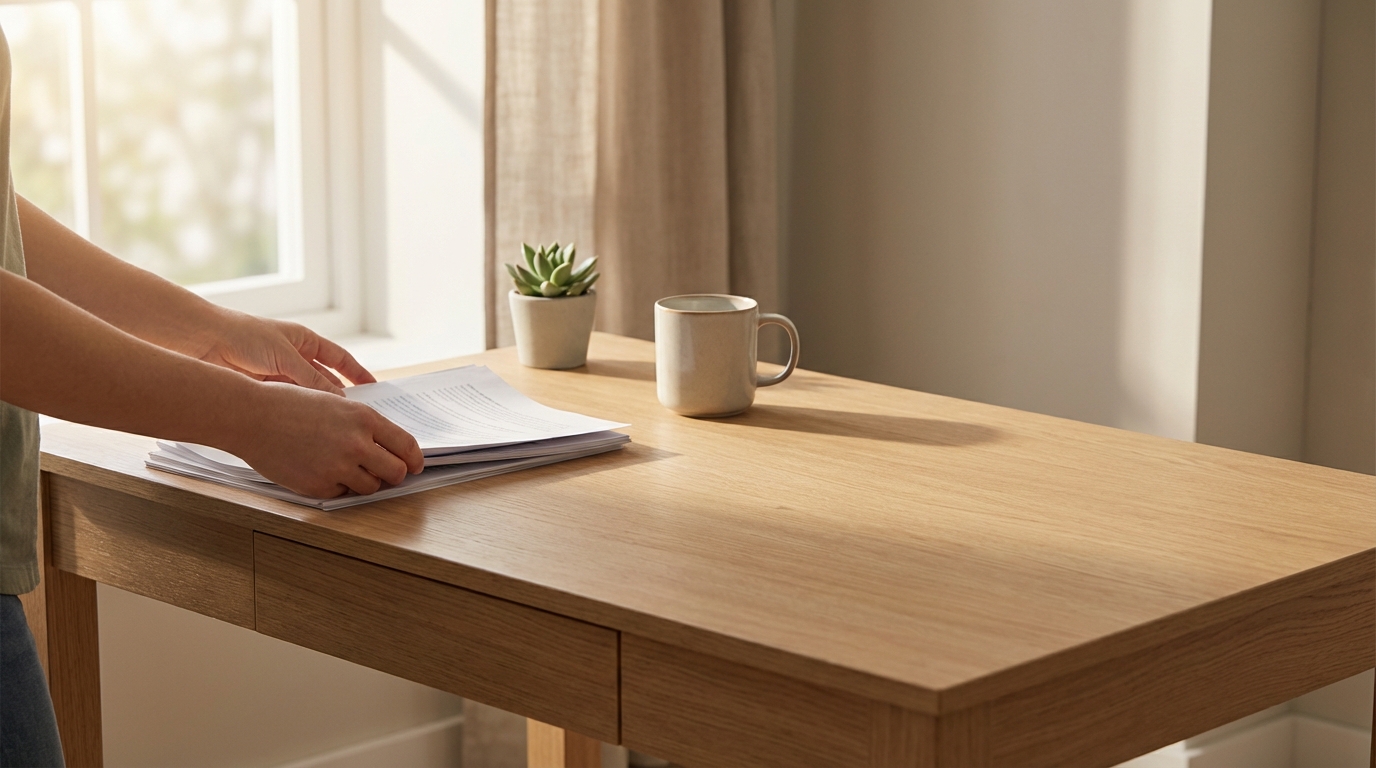
Clear surfaces can change how a home feels within minutes. A desk without piles, a kitchen counter with open space, or a coffee table that shows its surface can make a room feel calmer and easier to use. Many people notice that when surfaces are clear, their thoughts feel clearer too. This connection between physical order and mental clarity is not about perfection or style. It is about how the brain processes what it sees and how the body responds to its surroundings.
How the Brain Responds to What We See
The human brain is always working to understand the environment. Every object in view sends visual information that the brain must process. When a surface is crowded with items, the brain has to sort through shapes, colors, and meanings. This constant sorting uses mental energy.
Clear surfaces reduce the amount of visual information coming in at once. With fewer items to process, the brain can relax its scanning efforts. This allows attention to settle on what matters in the moment, such as a task, a conversation, or a creative idea.
Vision is a dominant sense for most people. What the eyes take in strongly affects mood and focus. A surface with open space gives the eyes a place to rest. This visual rest supports mental rest, even if the person is not aware of it.
Visual Noise and Mental Load
Visual noise is the cluttered look created by too many items in one area. Even useful items can become visual noise when they are all visible at once. Stacks of papers, small tools, mail, and decorative objects can compete for attention.
Each item on a surface can act like a small reminder. A bill might remind someone of money. A book might remind them of unfinished reading. A tool might suggest a task not yet done. These reminders add to mental load.
When mental load increases, focus becomes harder. The brain jumps from thought to thought, reacting to what it sees. Clear surfaces reduce these reminders and help the brain stay on one track longer.
Attention, Focus, and Open Space
Focus depends on the ability to ignore distractions. Distractions are not only sounds or notifications. Visual distractions are just as powerful. A clear surface removes many of these distractions at once.
Open space on a desk, for example, creates a clear boundary for work. The brain understands that the surface is meant for one main activity. This makes it easier to stay engaged with that activity.
Open space also helps with task switching. When a surface is cleared between tasks, the brain gets a signal that one activity has ended and another can begin. This reset supports better attention over time.
The Role of Stress and Calm
Cluttered surfaces can raise stress levels, even when a person does not consciously feel stressed. The body may respond with shallow breathing or muscle tension. This response comes from the brain trying to manage too much information.
Clear surfaces support a calmer state. Calm does not mean sleepy or unmotivated. It means the nervous system is balanced. In this state, focus and learning are easier.
When a room feels calm, people are more likely to start tasks and less likely to avoid them. Clear surfaces remove small barriers that can make tasks feel heavier than they really are.
Clear Surfaces and Decision Fatigue
Decision fatigue happens when the brain gets tired from making too many choices. A cluttered surface can force many small decisions. Where should this go. Should I deal with this now. Is this important.
Each small decision uses mental energy. Over time, this reduces the energy available for important choices. Clear surfaces reduce the number of decisions that need to be made throughout the day.
With fewer decisions competing for attention, the brain can focus better on meaningful work, learning, or rest.
How Clear Surfaces Support Memory
Memory works best when the brain can organize information. Visual clutter can interrupt this process. When many items are visible, it becomes harder to remember where things are and what needs attention.
Clear surfaces make it easier to create mental categories. Items that are put away have a home. The brain can store this information and retrieve it when needed.
This organization supports working memory, which is the type of memory used to hold information temporarily. A stronger working memory helps with reading, problem-solving, and planning.
Workspaces and Focus
A workspace is one of the most important areas where clear surfaces matter. Desks often collect items over time. Even small items can add up and reduce focus.
A clear desk sends a signal that the space is ready for work. The brain associates the surface with productivity rather than distraction. This association grows stronger with repeated use.
Keeping only the tools needed for the current task on the desk helps maintain focus. Other items can be stored nearby but out of sight. This balance supports efficiency without feeling empty or uncomfortable.
Paper and Visual Overload
Paper is one of the most common sources of surface clutter. Papers stack easily and can quickly cover a desk or table. Each sheet represents information the brain feels responsible for remembering.
Storing papers in folders, drawers, or trays reduces this visual pressure. When papers are out of sight, the brain does not have to process them constantly.
Clear surfaces allow digital tools or notebooks to be used more effectively, since attention is not divided between multiple piles.
Kitchen Counters and Mental Flow
The kitchen is a place where clear surfaces can strongly affect mental flow. Cooking requires attention, timing, and movement. Cluttered counters can interrupt this flow.
Clear counters make it easier to prepare food and clean up. The brain can focus on the steps of cooking instead of navigating around objects.
A clear counter also invites use. People are more likely to cook or prepare healthy food when the space feels open and ready.
Morning Routines and Clear Counters
Mornings often set the tone for the day. A clear kitchen counter can support a smoother morning routine. Making breakfast, packing lunches, or brewing coffee becomes easier.
When the first task of the day feels simple, the brain gains confidence. This positive momentum supports focus in later tasks.
Clear surfaces reduce the chance of forgetting items or feeling rushed, both of which can affect mental clarity.
Living Areas and Shared Focus
Living rooms and shared spaces affect not only individual focus but also group interactions. Cluttered surfaces can make a room feel busy and distracting.
Clear surfaces help people feel more present with each other. Conversations flow more easily when the environment is calm.
In shared spaces, clear surfaces also reduce conflict. When items are put away, there is less confusion about ownership and responsibility.
Bedrooms and Mental Rest
The bedroom is a place for rest and recovery. Clear surfaces in this room support mental clarity by improving rest quality.
When nightstands and dressers are crowded, the brain may stay alert longer. Items related to work or unfinished tasks can trigger thinking at bedtime.
Clear surfaces help the brain understand that the room is meant for rest. This supports deeper relaxation and better sleep, which in turn improves focus during the day.
Morning Clarity from a Clear Bedroom
Waking up to a clear surface can shape the morning mood. The first visual input of the day matters. A calm view supports a calm start.
Clear surfaces reduce the feeling of being behind before the day begins. This mental clarity can improve focus throughout the morning.
Simple habits like putting items away at night can create this effect consistently.
Children, Teens, and Learning Spaces
Children and teens are especially sensitive to their environments. Clear surfaces can support learning and focus at any age.
Study areas with clear desks help young people stay engaged with schoolwork. Visual clutter can make homework feel harder than it is.
Clear surfaces also help teach organization skills. When items have a place, children learn how to manage their belongings and attention.
Creative Play and Open Surfaces
Clear surfaces do not limit creativity. In fact, they often support it. An open table invites drawing, building, or writing.
When the surface is clear, the mind feels free to explore ideas. The brain does not have to work around physical obstacles.
After play or study, clearing the surface again helps reset focus for the next activity.
Emotional Effects of Physical Order
Physical order can influence emotions. Clear surfaces often create a sense of control and stability. This emotional state supports mental clarity.
Cluttered surfaces can lead to feelings of guilt or frustration. These emotions can drain focus and motivation.
By keeping surfaces clear, people often feel more capable and confident. This confidence supports sustained attention.
Habits That Keep Surfaces Clear
Clear surfaces are easier to maintain with simple habits. These habits do not require large amounts of time or effort.
- Putting items away after use
- Clearing one surface at the end of the day
- Limiting the number of items kept on display
- Using storage that is easy to access
These habits support mental clarity by reducing daily visual load. Over time, they become automatic and require little thought.
The Link Between Movement and Clear Surfaces
Movement through a space affects focus. Clear surfaces allow smoother movement. When the body moves easily, the mind often follows.
Bumping into items or navigating around clutter can break concentration. Clear surfaces remove these interruptions.
This smooth movement supports tasks that require physical and mental coordination, such as cooking, crafting, or studying.
Clear Surfaces and Time Awareness
Cluttered surfaces can distort time awareness. Searching for items or managing piles takes time and attention.
Clear surfaces make it easier to see what is needed and what is not. This clarity supports better time management.
When time feels more manageable, focus improves because the brain feels less rushed.
Sensory Balance in the Home
Focus improves when the senses are balanced. Clear surfaces reduce visual stimulation, helping balance other senses.
When visual input is calm, sounds and smells are less likely to feel overwhelming. This balance supports sustained attention.
A home with clear surfaces can feel quieter, even when there is noise, because the brain is not overloaded visually.
Personal Meaning and Intentional Display
Clear surfaces do not mean empty or cold spaces. They allow room for intentional display. A few meaningful items can stand out more clearly.
When items are chosen carefully, the brain can appreciate them without distraction. This appreciation can boost mood and focus.
Intentional display helps the mind connect with positive memories or goals without feeling overwhelmed.
Adjusting Clear Surfaces for Different Needs
Different people have different comfort levels with open space. Clear surfaces can be adjusted to match personal needs.
Some people focus best with very few items visible. Others prefer a small number of familiar objects nearby.
The key is awareness. Paying attention to how surfaces affect focus helps guide what stays and what goes.
Daily Life and Ongoing Mental Clarity
Clear surfaces support mental clarity not just during work but throughout daily life. They make routines smoother and transitions easier.
From getting dressed to preparing meals to relaxing in the evening, open surfaces reduce friction.
This reduction in friction allows the mind to stay present and engaged with each part of the day.
The Relationship Between Space and Thought
Physical space and mental space are closely linked. Clear surfaces create a sense of openness that mirrors clear thinking.
When the environment feels open, the mind often feels more open to ideas, learning, and problem-solving.
This relationship continues to influence focus as long as the physical space supports it.